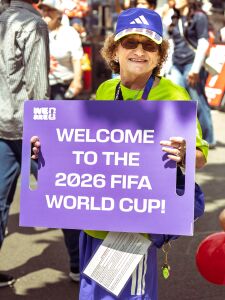
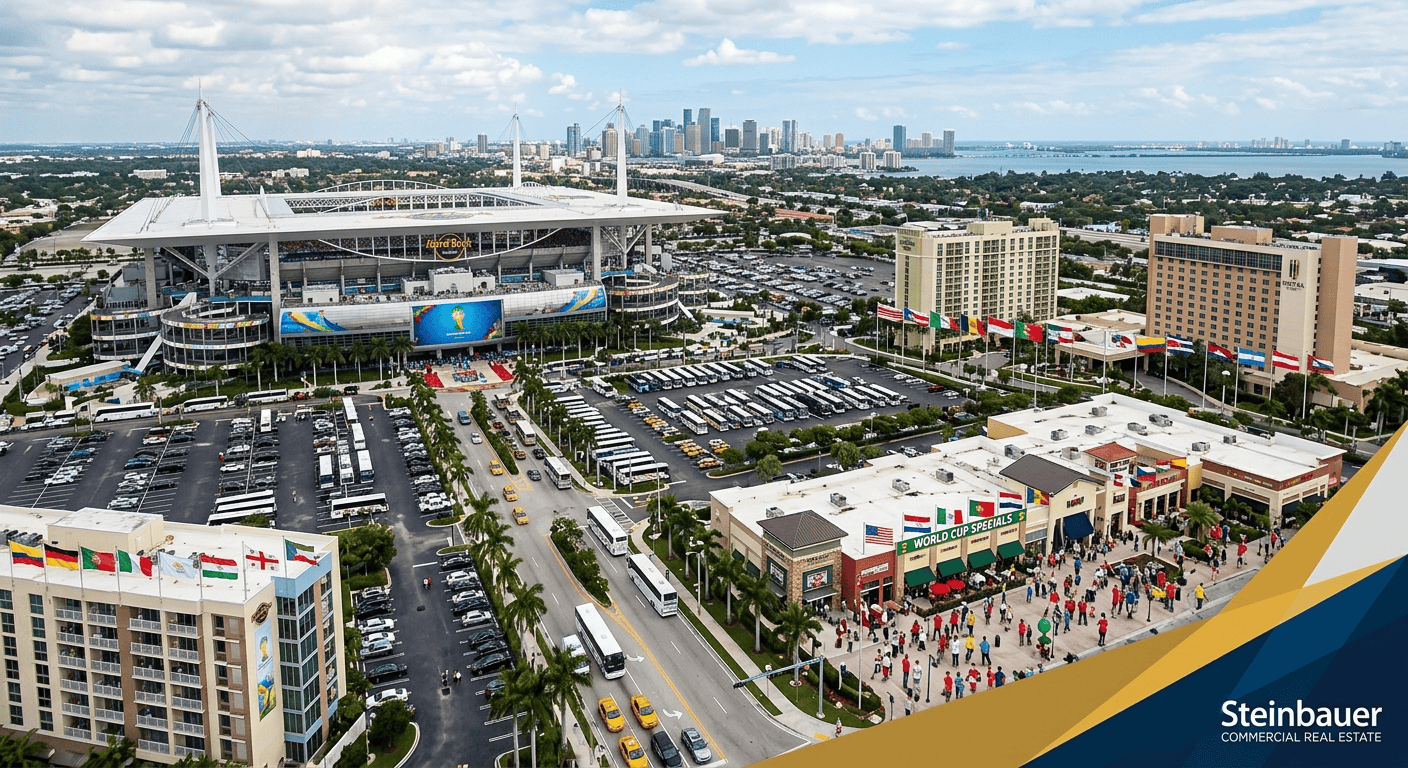
When Miami hosted matches at Hard Rock Stadium during this year’s FIFA World Cup, the impact reached well beyond the pitch. For South Florida commercial real estate, the tournament has offered a real-time case study in how a global mega-event moves hospitality, retail, and even long-term investor perception of a market.
1. Hospitality Felt It First
South Florida hotel bookings surged well ahead of pre-tournament projections in the months leading up to the event, with Miami tracking as one of the strongest-performing host cities nationally. That kind of demand spike is a reminder of how quickly hospitality real estate can respond to a single catalytic event — and why owners of well-located hotel assets near major venues are positioned to benefit most.
2. Retail and Restaurants Saw a Global Audience
Retail centers, restaurants, and entertainment venues near Hard Rock Stadium and throughout Miami’s tourist corridors captured a surge of international visitor spending during the tournament window. For retail landlords, events like this underscore the value of tenant mixes built for both locals and visitors — flexibility that pays off during high-traffic moments.
3. The Longer-Term Investment Story
Beyond the short-term bump, hosting a global event of this scale reinforces Miami’s standing as an international city — a factor that matters for corporate relocation decisions, foreign direct investment, and long-term office and industrial demand. Mega-events tend to accelerate infrastructure investment and civic attention in ways that outlast the event itself.
4. What Comes After the Final Whistle
The real test for South Florida CRE is whether the visibility and momentum generated by the tournament translate into sustained demand once the crowds go home. History from other host cities suggests the biggest beneficiaries are markets that were already on solid fundamentals — population growth, business-friendly policy, and infrastructure investment — rather than markets relying on the event alone.
South Florida’s Underlying Strength
Miami didn’t need the World Cup to be a growth market, but the tournament is a useful reminder of the city’s global draw and the ripple effects that follow. For investors and tenants evaluating South Florida real estate, understanding both the short-term catalysts and the long-term fundamentals is key to making the right call. Our Miami team at Steinbauer Commercial Real Estate can help you separate the noise from the signal. Get in touch to discuss opportunities across South Florida.